Last Modified (on the server side): Sun Jun 22 21:07:57 2025 GMT
🕛 Operation Midnight Hammer (June 2025) and the Fragile Dance of Secrecy, Speed, and Constitutional Truth
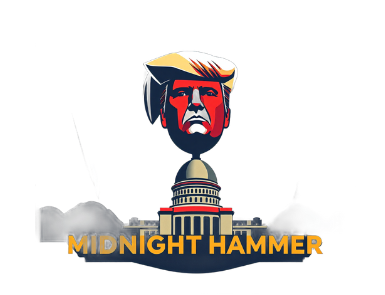
As someone on a path that blends spiritual inquiry with political awakening, I’ve grown wary of extremes—especially the kind that paint power as either divine or demonic. But recent events, particularly the unfolding details of Operation Midnight Hammer, compel me to wrestle with something ancient and urgent: What does legitimate power look like when exercised in absolute secrecy? And can even a bold act of national defense be right if it bypasses the very framework meant to hold it accountable?
We now know that on the night of June 21, 2025, former President Trump authorized a massive, precision military strike on Iran’s nuclear facilities—an operation so stealthy that Iran didn’t detect it until it was over. Reuters reports that decoy bombers launched from Guam, while the real B‑2 stealth bombers flew 18 hours from Missouri, supported by 125 aircraft and multiple submarine-launched Tomahawks. They hit hardened targets in Fordow, Isfahan, and Natanz using 30,000‑lb “bunker busters” and precision-guided munitions.
It was, as CBS News put it, the largest B‑2 strike in history. And according to Fox News, the Pentagon declared it a “total surprise.”
But surprise to whom? And more urgently, what did Congress know, and when?
As someone who reveres both transparency and strategic wisdom, I have to admit: there is a place for secrecy in government. Intelligence briefings to the Gang of Eight—the top bipartisan congressional leaders—exist for this reason. Under U.S. law (Title 50 of the U.S. Code), a president may brief only this small group in cases of extraordinary sensitivity. And when speed is essential, the War Powers Resolution allows military action so long as Congress is notified within 48 hours.
But the cracks show quickly here. According to The Guardian, key Democratic leaders in that group—including Rep. Jim Himes and Sen. Mark Warner—say they weren’t briefed before the operation. Himes said bluntly:
“My attention to this matter comes before bombs fall. Full stop.”
Meanwhile, Republican leaders like Speaker Mike Johnson and Sen. John Thune were allegedly briefed in advance—though not in a formal Gang of Eight session. This bifurcation of knowledge raises troubling questions. Was the intent truly to protect operational secrecy, or was there an element of political maneuvering—informing allies and excluding opponents?
The mystics remind us that power without inner truth becomes a weapon against the soul. As Ramakrishna said, “God is in all men, but all men are not in God; that is why we suffer.” And so I find myself reflecting not only on law and policy, but on what this moment says about our collective psyche.
When Trump acted—perhaps with the noblest of intentions to prevent Iran from reaching nuclear capability—did he also chip away at something sacred? Not just constitutional balance, but our capacity for trust?
Because trust is not built on results alone. It’s built on process, on the quiet knowing that those we elect are being heard before the hammers fall.
Whether or not the strike was effective—and Iran disputes that—the precedent it sets may outlive its tactical success. In the absence of shared briefing, bipartisan consent, or a formal vote, we now normalize the idea that a president can launch a major strike on another nation’s sovereign nuclear program without Congress even knowing beforehand.
And with some now calling for Trump’s impeachment, and others hailing him as a bold savior, it seems clear that we’re not just debating a military operation—we’re struggling for the soul of our republic.
Perhaps one day, we’ll look back and say that Operation Midnight Hammer was necessary. That its secrecy saved lives. That its speed averted a catastrophe. But I still believe that secrecy is only virtuous when it serves transparency in the long run—and that wisdom must never be divorced from accountability.
Because power, like the breath in meditation, must be both inhaled with strength and exhaled in surrender. Only then can it flow through us—not over us.
Did this post resonate with you? Please let me know. Or Sign the Guestbook.